Meteoviva Strengthens its Footprint in the Paris Region
December 01, 2025





meteoviva is a leading German tech company introducing innovative technologies into the field of building management software and experiencing considerable growth. Founded with the vision of transforming how buildings consume and manage energy, the company has rapidly positioned itself as a reference in smart-building optimization, helping real-estate players transition toward more efficient, automated, and sustainable operations. Their journey in the Paris Region began in 2021.
By joining one of Europe’s most advanced ecosystems for energy transition and smart-building expertise, the company is strengthening its footprint in a market where digitalization, sustainability targets, and operational performance are converging at scale.
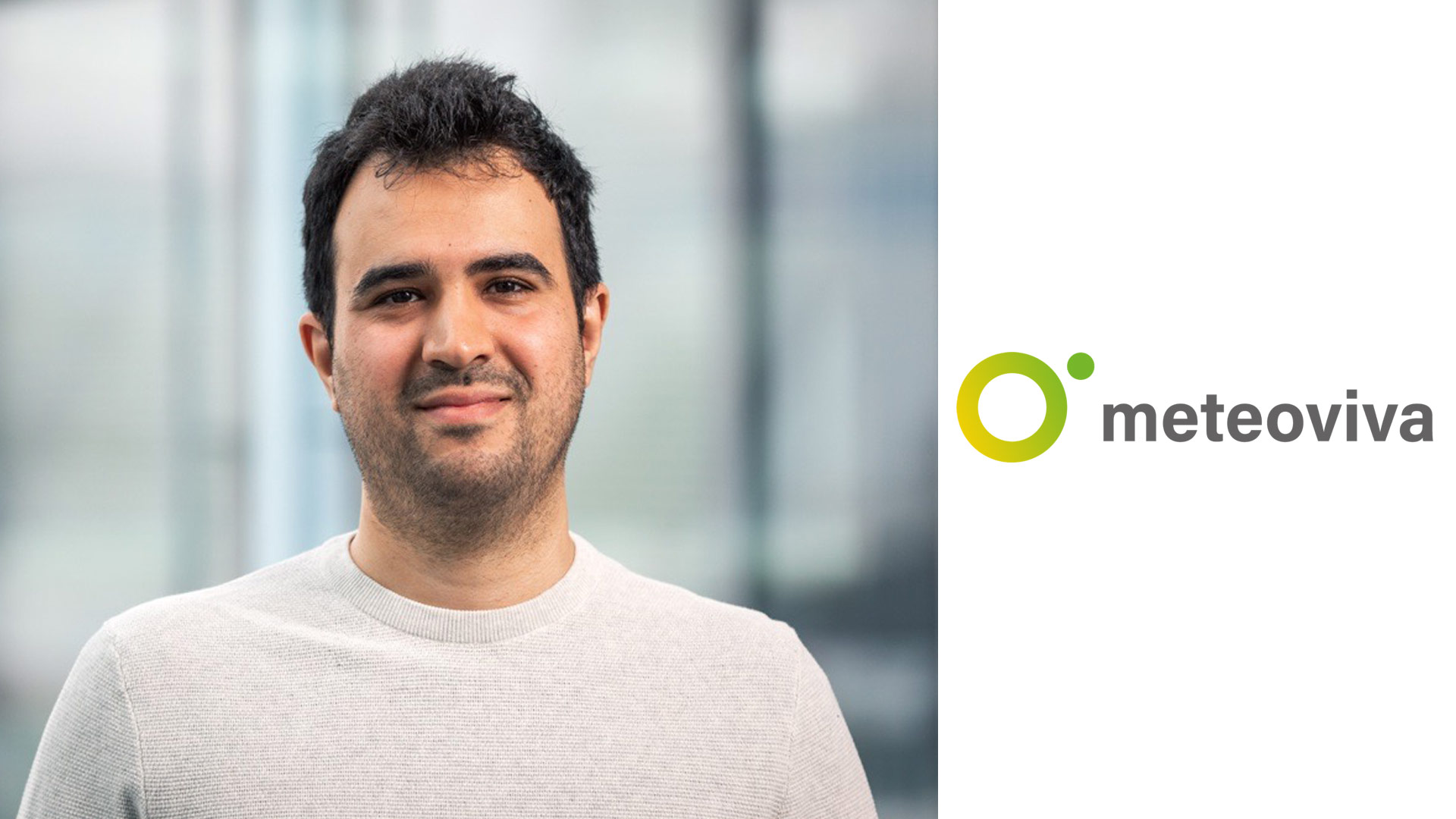
In this exclusive interview, Issam El Hamouti, Project Engineer at meteoviva, reflects on the company’s journey in France, the growing role of predictive building control in decarbonization strategies, and how this momentum is shaping the future of high-performance, low-carbon buildings in France and on the global stage.
I currently work as a Project Engineer at meteoviva, where I manage projects throughout France, with most of my work focused on the Paris Region. My role covers the entire lifecycle of a project, from the initial technical assessment to the commissioning phase. One of my key responsibilities is to balance two core objectives: ensuring consistent comfort for building tenants while achieving significant energy savings guided by a strong commitment to uphold the principles of the 'Décret Tertiaire'.
When a client validates an asset, I begin with a feasibility study and coordinate with stakeholders throughout the project. I analyze the building's HVAC infrastructure, assess operational constraints, and identity opportunities for optimization before preparing the study report and integration strategy. I then oversee implementation and system communication until the solution operates as intended. Once the building is fully connected, tested, and optimized, I lead the commissioning phase before transferring operational responsibility to our Building Operations engineering team.
Overall, my role requires technical expertise, stakeholder coordination, and a strong focus on delivering comfort for tenants and improving energy efficiency.
Since meteoviva established its presence in the Paris Region, the company has experienced significant evolution across several dimensions: team development, market expansion, and product innovation.
One of the key milestones has been the expansion of our local team. meteoviva has recruited competent engineers with strong technical backgrounds to support and manage projects across the region, strengthening our capacity to deliver high-quality deployments adapted to the French market.
Our portfolio in Paris has expanded substantially, with a rising number of buildings entrusted to us by international clients. Alongside long-term partners such as DEKA, new clients are joining us, which reflects increasing confidence in meteoviva’s technology and the relevance of our solutions for the French real estate market.
This momentum has been reinforced by our sales team, whose work has helped build strong relationships with local stakeholders.
Another important milestone is the ongoing development of new products designed to address emerging needs in the industry. I’d like to quote two examples:
These innovations will be progressively deployed across assets in the Paris Region to support optimal energy performance and full compliance with local regulations.
The Paris Region ecosystem has played an important role in supporting both our innovation perspectives and the development of our portfolio. The ecosystem has already given us access to professional networks, and valuable insights, for example, through interactions with property management stakeholders and programming companies. These connections have strengthened our market understanding and helping us to refine our solutions.
As leaders in decarbonization, we’re tackling the very hot research topic of reducing greenhouse gas emissions, an area where our expertise can really support both innovation and sustainability efforts thus it’s intended to partner with local research hubs and contribute to future scientific publications.
The region’s innovation clusters and smart-building networks will also be key for us, especially as we advance our DSM solution, which represents a strong opportunity for collaboration, testing, and co-development with Paris region partners.
The workforce and talent available in the Paris Region are innovative, skilled and diverse. The region attracts top professionals across technology, engineering, research, and business development providing a strong base for companies looking to grow or develop innovative solutions. For meteoviva, this means access to professionals with experience in smart-building solutions and energy efficiency. The combination of technical knowledge, industry experience, and a culture of collaboration makes the Paris Region for meteoviva an ideal environment to thrive.
Many partnerships have contributed to meteoviva’s success in the Paris Region. For example, at the property management level, among others, there is BNP Paribas Real Estate that has been a key partner, supporting us across several projects by providing access to their buildings, operational insights, and coordinating with facility management. This collaboration has created a comfortable ground for us to work efficiently throughout the different milestones of the projects.
These collaborations with key partners enable us to implement our solutions effectively, leading to measurable results on the ground. The ‘Solstys’ building project is a clear example of how meteoviva’s solutions deliver tangible results. With significant energy savings of around 38% across heating, cooling, and HVAC electricity, and a reduction of approximately 133 tons of CO₂, this project demonstrates the real impact of our technology on both operational efficiency and decarbonization efforts in the Paris Region.
In recent years, our solutions have evolved to strongly support more sustainable ways of energy usage by focusing on digitalization for a smarter building operation. For instance, we’re exploring HVAC real-time control capabilities. Moreover, we’ve introduced more connected sensors that operate through IoT connectivity and do not require traditional cabling or invasive installation work. They can be easily deployed and that allows real-time monitoring.
Over the last five years, our client base has expanded beyond traditional tertiary buildings. In France, we are preparing to start operations in a logistics center of around 28 132 m2, and internationally we have a successful experience with high-profile projects such as the American University in Washington D.C., The shopping center “Das Schloss”, and Düsseldorf Airport in Germany. Looking ahead, meteoviva plans to target many landmark projects in Paris, including public institutions, the high-rise buildings, and airports. This demonstrates our ability to deliver solutions across a wide range of sectors, from commercial and educational buildings to large-scale transportation hubs.
Establishing a presence in the Paris Region has been highly strategic for meteoviva. It provides increased visibility in a key European market, easy access to business hubs, and stronger connections to both European and global clients. As mentioned earlier, new clients in the region are showing strong interest in meteoviva’s solutions. The Paris Region supports our growth strategy by facilitating partnerships with high-profile organizations and allowing us to quickly engage with new opportunities across multiple sectors.
The 2018 conference organized by Paris Region served as the spark that introduced meteoviva to the French market and Choose Paris Region’s ongoing collaboration has since supported our growth by helping us strengthen our presence in Paris and strengthen talent acquisition.
My experience serves as a testament to how these efforts in talent acquisition have helped attract professionals to meteoviva in Paris. Five years ago, before being a part of meteoviva, one of the first posts I came across while researching the company was on Choose Paris Region. At the time, my interest in the company itself and the opportunities to evolve professionally in the Paris Region created the perfect combination that convinced me to pursue my role as a project engineer.
Choose Paris Region has been a true springboard for our introduction in the French hub. We are excited that, in the future, through their network, we will have the opportunity to meet new partners and explore potential collaborations. We truly appreciate the collaboration and look forward to exploring new buildings’ potential.
For international smart-building technology companies looking to set up in the Paris Region, I would advise focusing on three key factors. First, utilize efficiently local networks and partners early on — they are invaluable for expanding in the market and identifying opportunities. Second, understand the regulatory and sustainability landscape, which is very advanced in France, as aligning with it can accelerate the adoption of your solutions. Finally, stay open to collaboration and innovation: the region is full of potential partners, clients and talents that can help the company flourish.